Arturo Macias
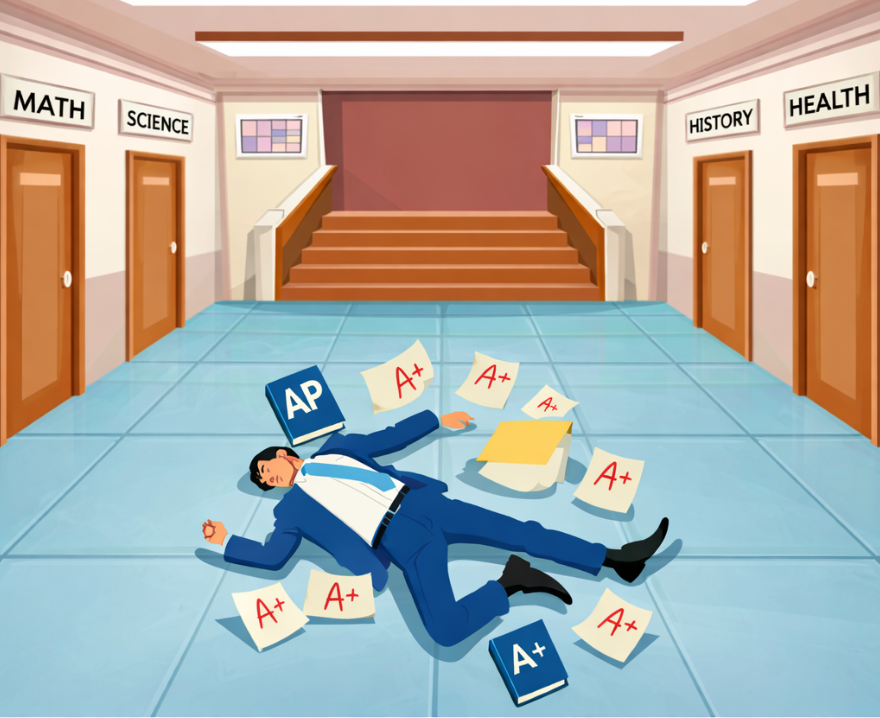
Students can feel like the whole world is closing in just from school.
During his sophomore year, Yug Sonawane ’27 found himself going into a downward spiral. Despite the late nights spent prepping for speech and debate tournaments and the rigorous schedule of classes and extracurriculars, the results weren’t coming in. The harder he worked, the more discouraging the losses became.
“I kind of pushed myself a little too hard,” Sonawane said. “It took some time to realize that sometimes… the way you’re pushing yourself is just not the right way to do it.”
Sonawane’s experience is becoming a common narrative at Brophy College Preparatory, where the line between high achievement and “workaholism” is increasingly blurred. At the Academic Resource Center, faculty are seeing the students trapped in a “reactive” struggle academically rather than a proactive journey toward learning.
Kristen Venberg, Brophy’s Learning Resource Coordinator, notes that the root of student exhaustion often lies in a lack of strategy.
“A lot of students just fly by the seat of their pants,” Mrs. Venberg said. “They aren’t organized enough to be proactive. They’re always reactive. They’re always trying to catch up versus having a plan of action for the week.”
This cycle often results in the “8:00 p.m. surprise,” where students begin to realize too late that a major assignment is due. According to Mrs. Venberg, this leads to a “completion only” mindset. “You just do it for completion versus doing it to actually learn something,” she said.
This “spiral” is more than just a feeling; it is also a regularly documented physiological shift.
According to The Mayo Clinic, when the body is under constant academic pressure, it remains in a “fight or flight” state, flooding the system with hormones like cortisol and adrenaline. While these hormones are helpful in short-term emergencies, persistent exposure can begin to disrupt the brain’s ability to handle complex tasks and high-level organization, the very tools Mrs. Venberg says are required to escape this cycle.
For Sonawane, the breakthrough came when he stopped measuring success by the volume of work he put in and instead started measuring it by the quality of his reflection. By doing “less hard prep” and focusing more on analyzing his previous rounds, he found more success this year, eventually advancing to elimination rounds in national competitions.
“If anybody’s facing the fear of feeling like they want to give up… you should just keep going, because the next year is always going to be better,” Sonawane said.
However, the habits formed in high school have long-term consequences. Mrs. Venberg warns that the “doing it yourself” mentality can set a dangerous precedent for young teens alike.
“If you don’t make good habits now, they’re going to be harder to break in college,” Mrs. Venberg said. “Here you may just get an F… but some bosses, depending on what job you have in real life, don’t have as much wiggle room.”
Despite the pressure, the ARC makes a point that the Brophy man should not work in isolation but instead utilize the school’s support systems. Mrs. Venberg urges students to use all resources from our Priests to our counselors and to remember that “reaching out for help actually is strength.”
Ultimately, Sonawane found that the fix to burnout wasn’t a trophy or a high GPA, but the community built along the way.
“The best memories I have at these tournaments are being with my friends,” Sonawane said. “These moments in my life are all just bigger than the successes that I’ve had.”
Mrs. Venberg agrees, offering a final piece of advice for those still stuck in the spiral, “Step back, [and] breathe… You’re gonna be okay.”