













Athletes at Brophy often treat rest like a weakness. It is common to see students training before school, after school, and on weekends, even when their bodies are tired. What starts as a drive to improve can turn into a compulsion, pushing athletes past their limits and into injury or burnout.
Overtraining occurs when an athlete exceeds the body’s ability to recover, leading to chronic fatigue, repeated injuries, and mental stress. Coaches and teammates often celebrate extra workouts, and social media shows only highlights and progress. This creates a culture where pushing through pain feels normal.
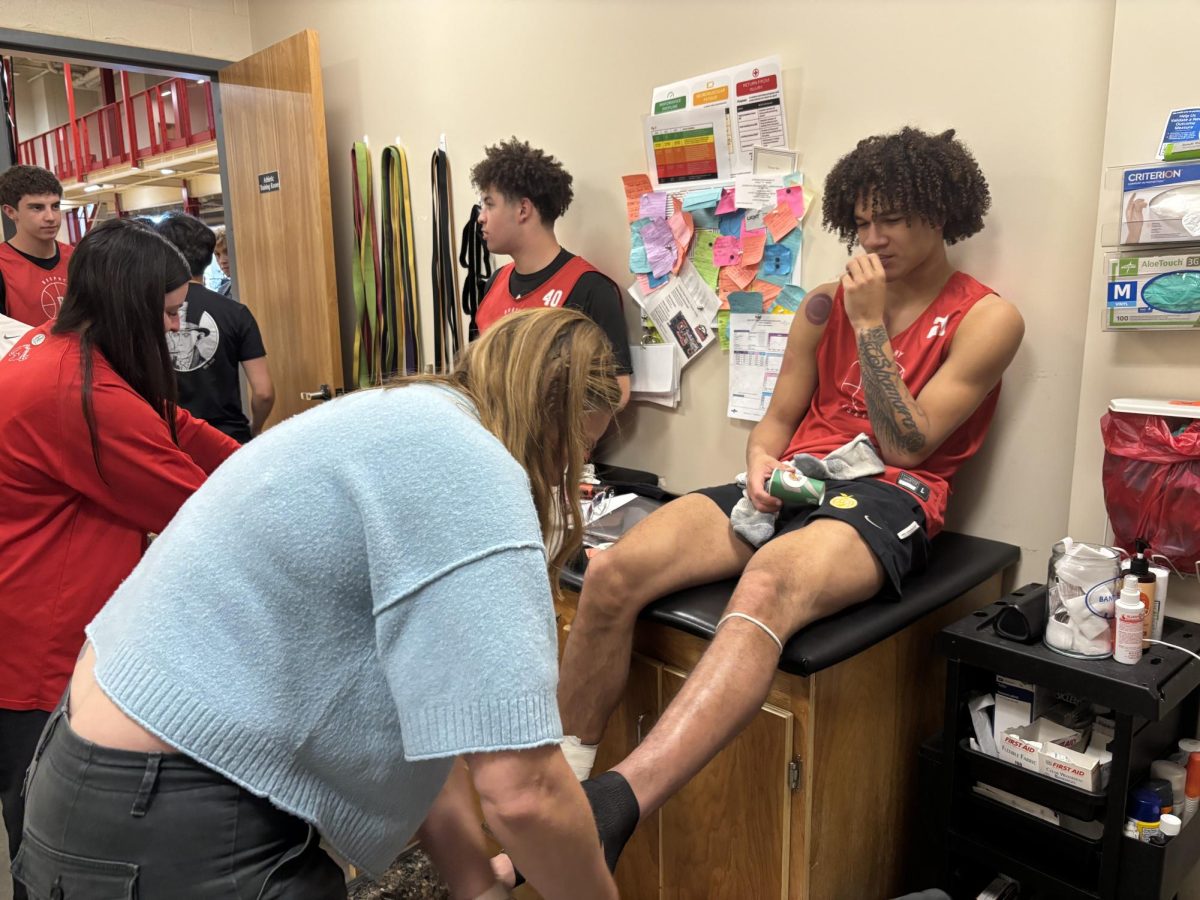
Brophy trainer Ms. Danelle Wade said that overuse injuries are the first warning sign of overtraining.
“Most commonly, you’ll start to see overuse injuries… but also burnout. Kids will come in and start talking, like, just not having fun with their sport anymore,” she explained.
Ms. Wade added that athletes often ignore these signs because they have been trained to push through pain. “Yes. For sure. They feel rest will cost them a spot or their season,” she said.
The pressure is extremely high, primarily due to Brophy’s intense athletic culture. Club sports and year-round training leave little room for recovery. Brophy basketball player Hale Hansen ’26, who recovered from a stress fracture in his foot last year, said the hardest part was feeling guilty for taking time off.
“It gave me a more knowledgeable point of view to smartly train and get better,” he said. Hansen added that recovery taught him that rest is part of training, not the opposite of it.
“It gives you a better sense of your body, and once you figure that out, everything else becomes way easier,” he said.
Ms. Wade emphasized that athletes often do not realize they have overtrained until injuries occur. “When it’s a constant breakdown, or they just continue to not feel normal anymore… that’s when they see they’ve pushed too far,” she said.
Overtraining may be rewarded in the short term, but as Hansen’s story shows, listening to the body and prioritizing recovery can lead to long-term success.