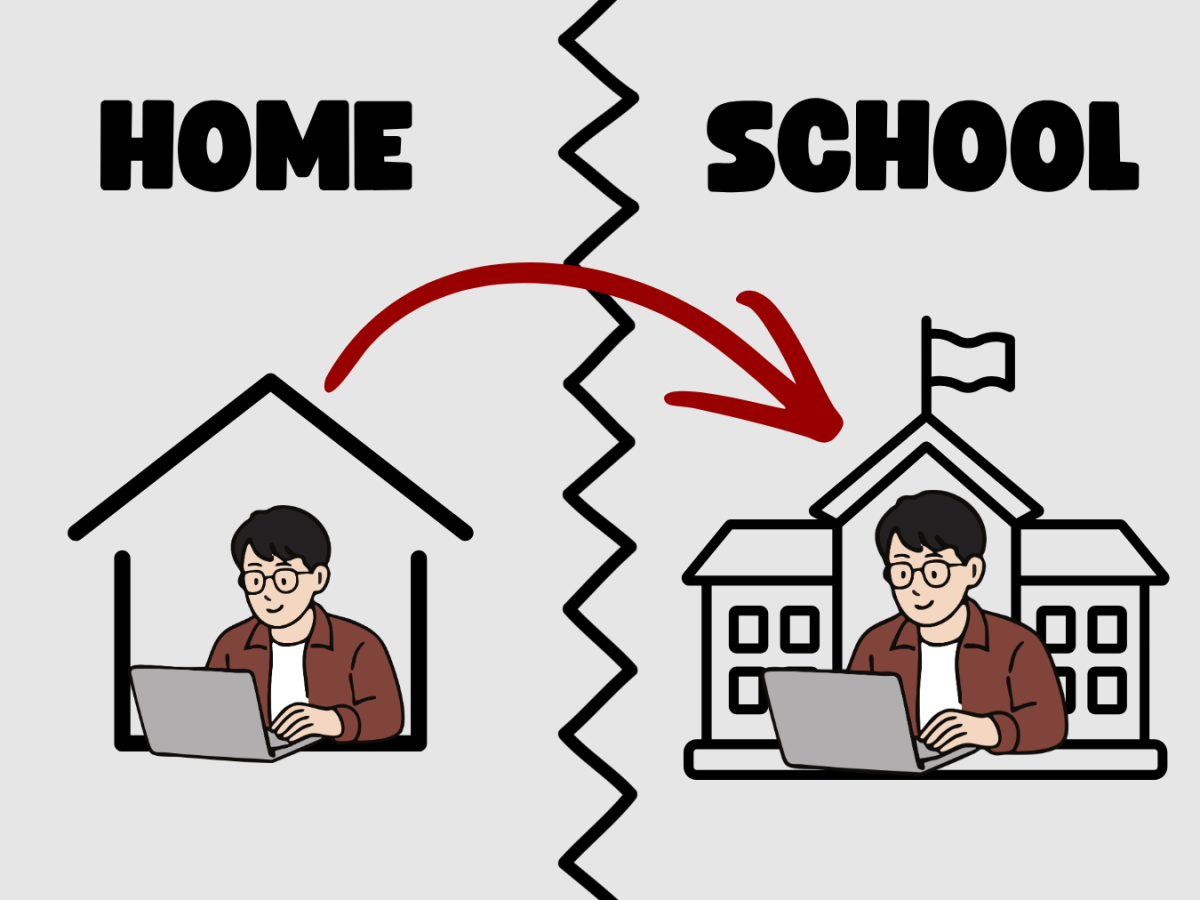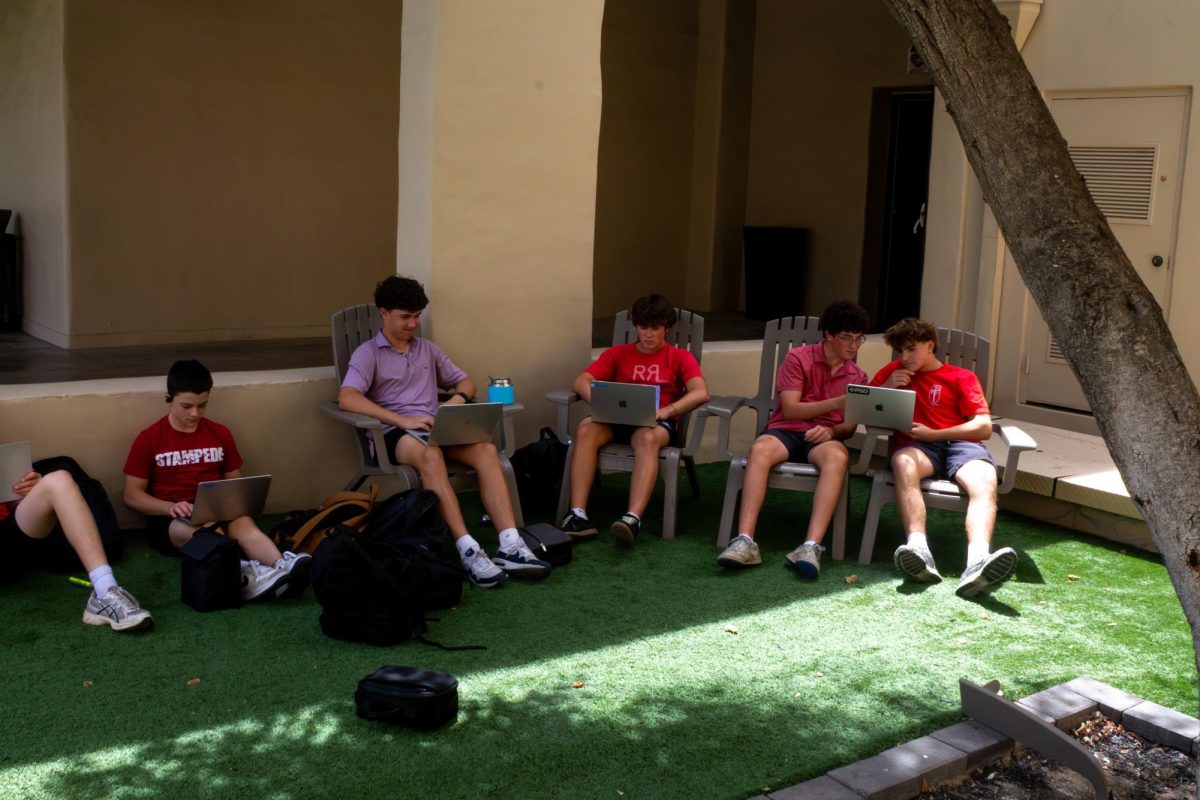









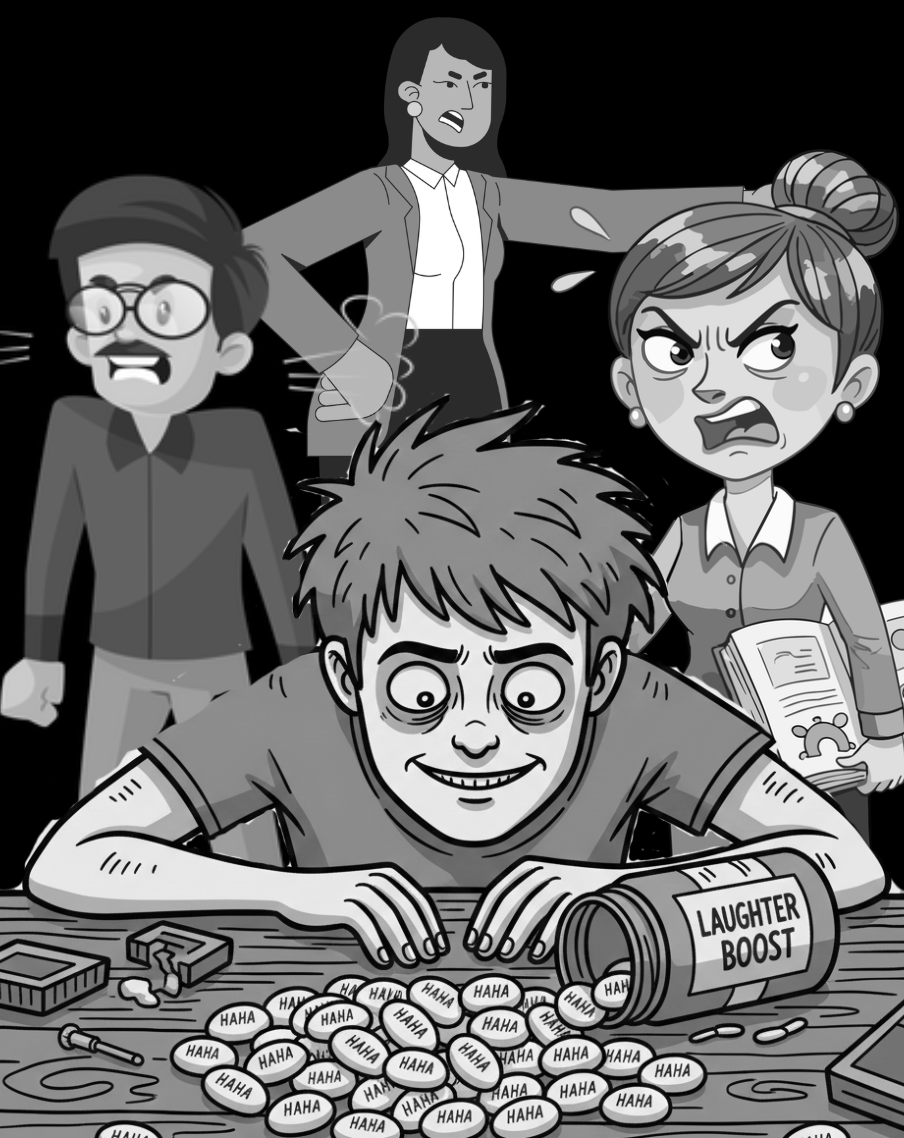






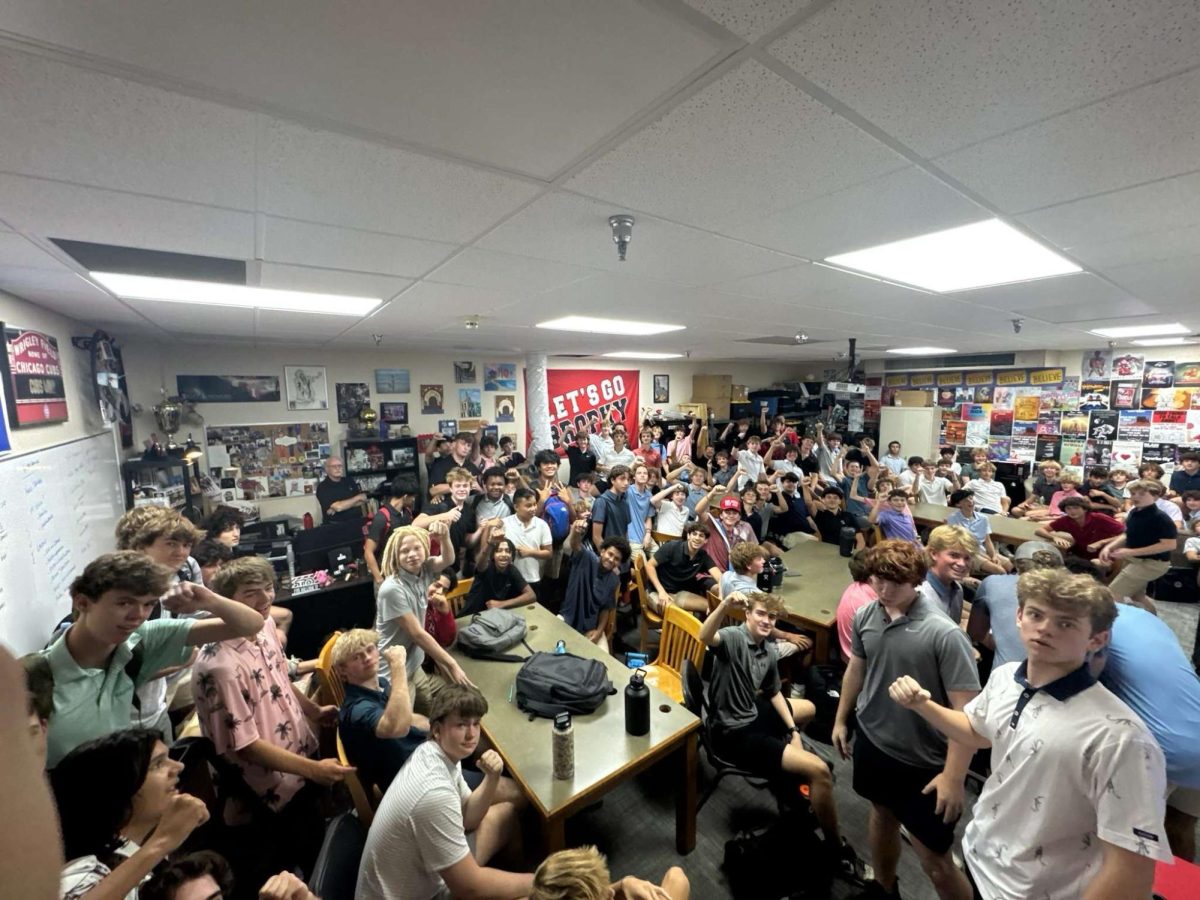
In 2026, Brophy College Preparatory instituted a phones off and in backpack policy from bell to bell to combat the rise in digital addiction among students. Most social media apps have algorithms that only show people what they want to see, making them highly addictive and the apps very lucrative.
Recent data has shown that platforms generate over $11 billion in annual advertising revenue from online U.S. users under 18.
In a study done by the 2024 U.S. Surgeon General’s Advisory, federal health officials have warned that social media has become an “unregulated experiment” on the youth in America today. Which has become a financial incentive for continuing the development of predictive AI designed to exploit the brain’s early development.
Brophy faculty members have observed this experiment firsthand, which has contributed to the school’s recent implementation of a campus-wide no phone policy.
“The people who decide how we interact digitally are motivated by profit and attention,” said Mr. Jared Reasy, who teaches computer coding at Brophy. “The science isn’t as fast or as efficient as these addictive media are garnering attention. It seems like a really troubled experiment.”
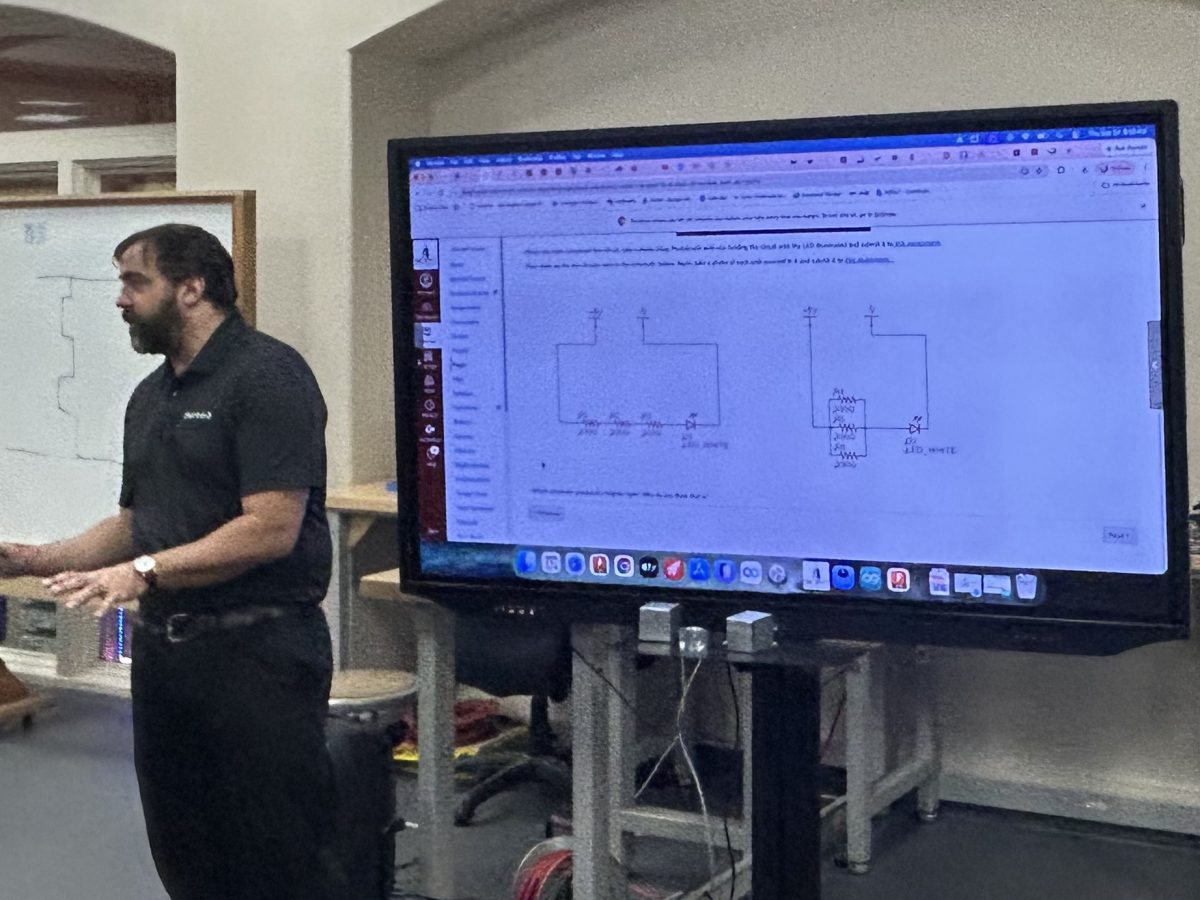
The engine driving this experiment is the algorithm, essentially a set of instructions for a computer to follow. Mr. Peter Robles ’20, a Brophy math and coding teacher, said that these instructions are strictly designed to increase watch time by adolescents.
“That is how they make money,” said Mr. Robles. “They prioritize how long people stay on the app.”
The American PsychologicalAssociation (APA) reported in a 2023 study that adolescent brains are biologically hypersensitive to social rewards like “likes” and “streaks.” Because the prefrontal cortex, the brain’s “braking system,” does not fully develop until your mid-20’s, students are more vulnerable to reward systems used by apps.
Beyond the immediate emotional toll, Mr. Robles expressed concern that the growth of AI will lead to a brain overload. He warns that when students rely too heavily on algorithmic suggestions, they risk losing the capacity for independent thinking.
“They’re offloading their cognitive load to AI, which reduces critical thinking,” said Mr. Robles.
The main hurdle for educators is a lack of transparency. Because the code is proprietary, the public cannot see exactly how these apps decide what content to serve. Mr. Reasy compared the current technological landscape to “gunpowder against a bow and arrow,” noting that the medium is changing faster than the ability to regulate it.
“It’s not public what these algorithms are doing,” Mr. Reasy said. “We’re handing tablets and phones to kids at younger and younger ages, and we aren’t really aware of how that impacts their brain development long term.”
As these algorithms become more self-sustaining, the rise of digital addiction at Brophy is increasingly viewed by faculty not as a failure of student willpower, but as the calculated output of a for-profit system.