
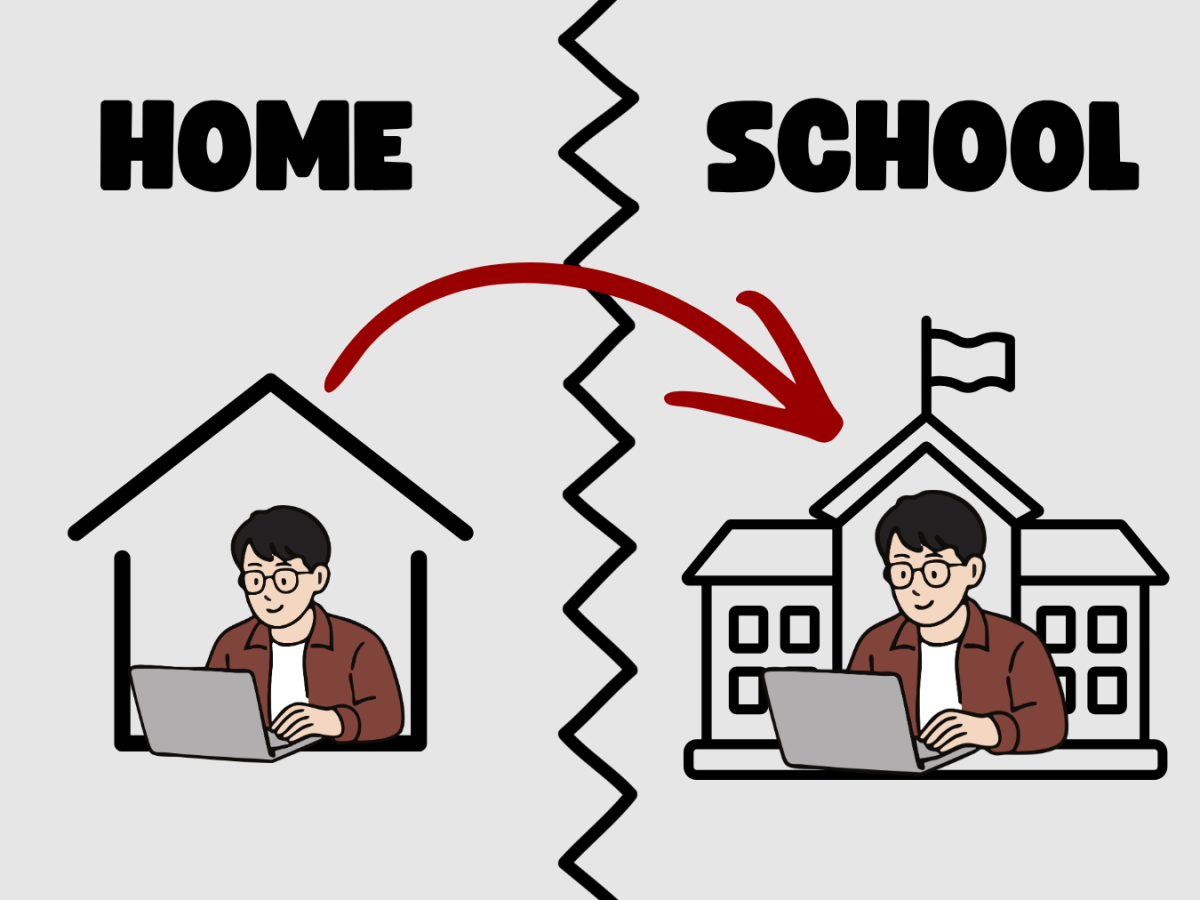












Generative AI has pushed some English teachers to move graded writing from home into the classroom, changing the way students write, revise, and show their own work.
Generative AI does not mean that writing assignments have been canceled for English teacher Mrs. Amanda Ruhl. Students now complete these assignments differently because generative AI allows them to write during the lesson. This change helps Mrs. Ruhl monitor the writing process while teaching students how to use educational AI tools.
“Gone are the days of ‘Here’s your essay assignment, see you in a week; bring a rough draft,” said Mrs. Ruhl.
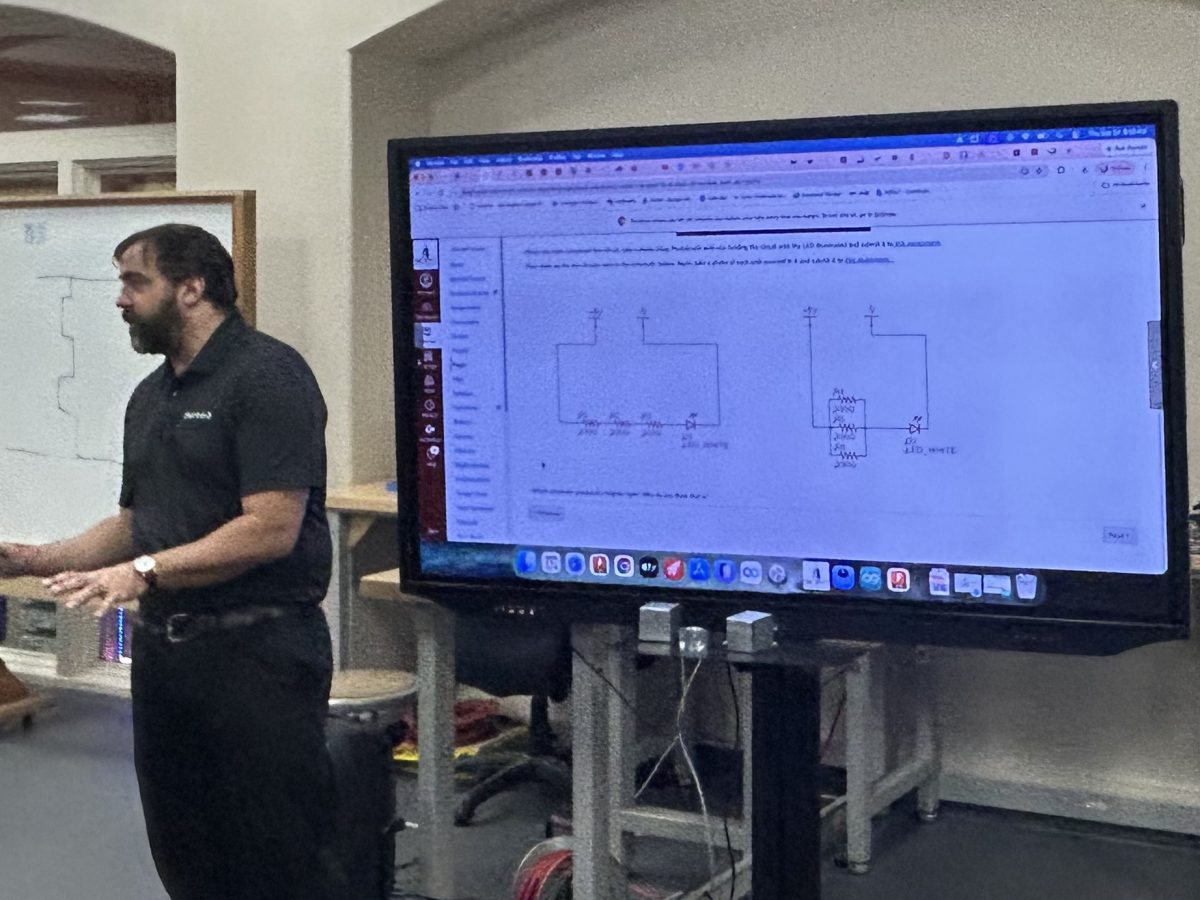
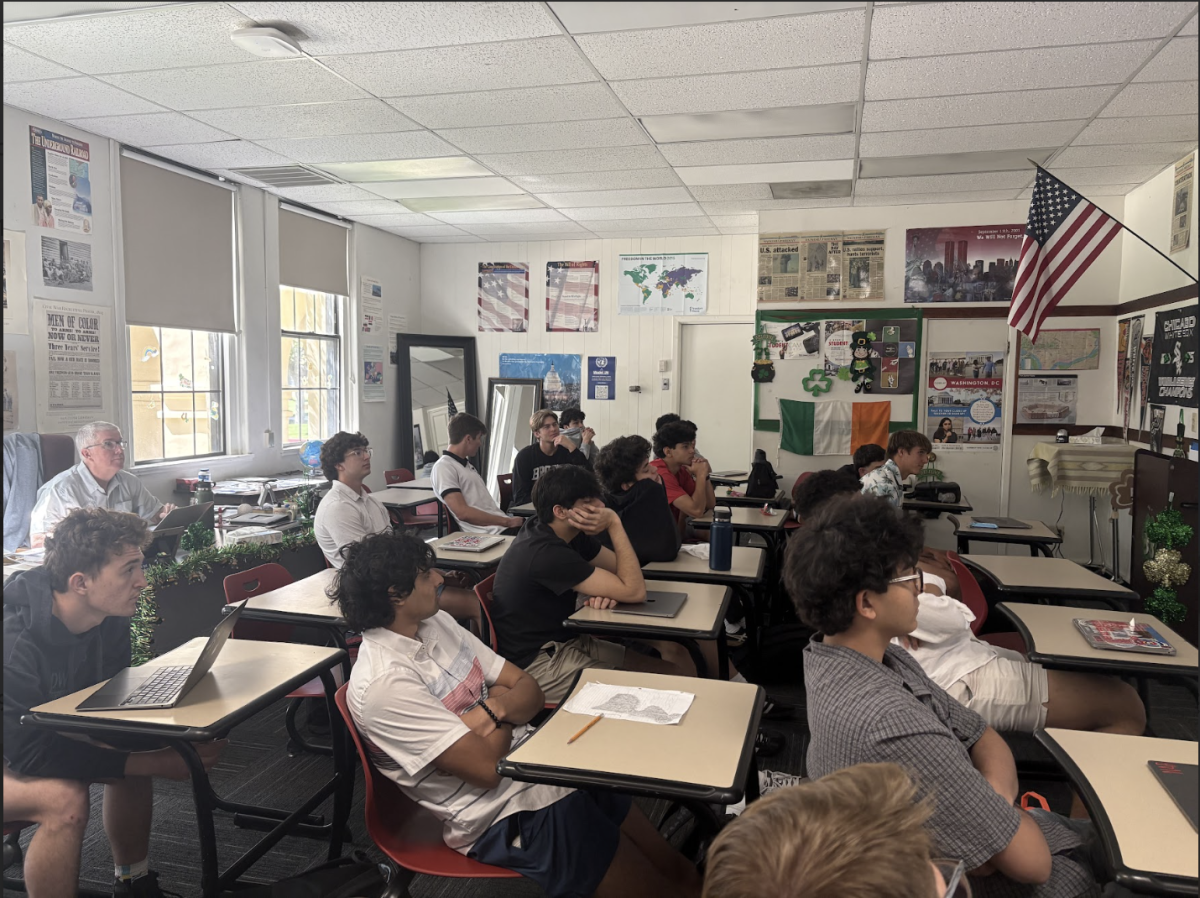
For many Honors English 2 assignments, students have to create outlines with their computers closed. Then, they draft their writing in LockDown Browser, where access codes are provided every time a new lesson starts, thus limiting the amount of time spent on the documents.
Mr. Tom Danforth ’78, who also teaches English, has seen a similar change in how students complete their writing assignments. When he first started teaching, students generally had a week to complete longer essays at home. Now, “It’s virtually all in class on LockDown Browser,” said Mr. Danforth.
Previously, Mrs. Ruhl used Google Docs plugins and typing tracking to check students’ writing outside of the class.
“I found that I was policing cheating and focusing my energy on that more than actually giving feedback,” Mrs. Ruhl said.
Currently, grading writing takes place in the classroom, which allows Mrs. Ruhl to witness how students do prewriting, writing, and revising.
Although the way students complete the assignments has changed, Danforth said the purpose of the assignments has remained largely the same. “The writing prompts and assignments haven’t changed, essentially,” he said.
Mrs. Ruhl even uses AI in AP Language as revision and practice software. After getting feedback for an argumentative essay, the students can give their original essay to ChatGPT and ask it to show them a better-scoring response, allowing the students to compare both responses.
According to Mrs. Ruhl, the key difference is if the student has written their original work.
“AI is great when students already have something authentically theirs,” Mrs. Ruhl said.
Danforth also sees AI as a useful tool when students are still doing their own thinking. He said AI can help students brainstorm topics, organize ideas and edit their work. “I think it’s tremendous,” Mr. Danforth said.
Further, Mrs. Ruhl made clear that students need to know how to use AI in an effective way, meaning that students should know how to write good prompts, how to ask a question, and understand the rubric of an assignment.
However, Mr. Danforth said AI can also create problems when students use it instead of doing their own work. “It definitely is a double-edged sword,” he said.