



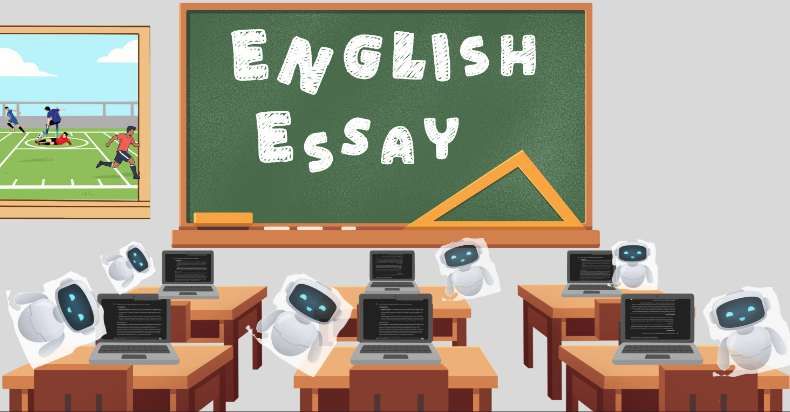







When there’s an essay due at midnight, an assignment due next class, or a study guide to fill out, most students’ first instinct is to open ChatGPT. According to some, it might even be an addiction.
For a growing number of high school students, artificial intelligence has become a primary tool in academics as well as daily life. According to the College Board, in 2023, student AI use when dealing with schoolwork was around 13%. Now, in the
beginning of 2026, it has risen to around 84%. Statistics show AI is becoming increasingly more pervasive in student life. One anonymous student said, “Yeah, I lowkey use AI all the time.”
According to the Dean of Students, Dr. Brian Johnson, AI use in Brophy has gone up substantially in the last couple of years. To explain the issue he used the microwave as a metaphor. Using a microwave isn’t bad, it’s fast, convenient, and efficient. But relying on it all the time means never learning how to actually cook. AI works the same way; when used responsibly for brainstorming, researching, and editing, it’s a valuable tool. But when students depend on it for everything, they are forfeiting their chance to grow and learn how to cook themselves.
“The concern,” Dr. Johnson said, “Is when students become so reliant on technology that they can’t think, organize, or process on their own.”
The reliance doesn’t always look extreme. Usually it appears in moments of stress where there isn’t enough time to do the assignment the right way, and that is when choosing the easiest option becomes logical. However, over time this can turn into a habit, and eventually, an addiction because of that overreliance, which is how addictions start.
As AI becomes more and more pervasive and more embedded in the world of education, the question isn’t where students should use it or not, but whether they are able to learn without it.