

















For many students, asking ChatGPT for advice can seem harmless. It is immediate, private, and requires none of the effort that comes with starting a difficult conversation with another person.
For one Brophy senior, that convenience was what initially led him to use AI for personal questions.
“I have these interesting… questions about my life,” the senior said. “It’s just easier when you have this resource right here to just go ahead and pop a question to ChatGPT.”
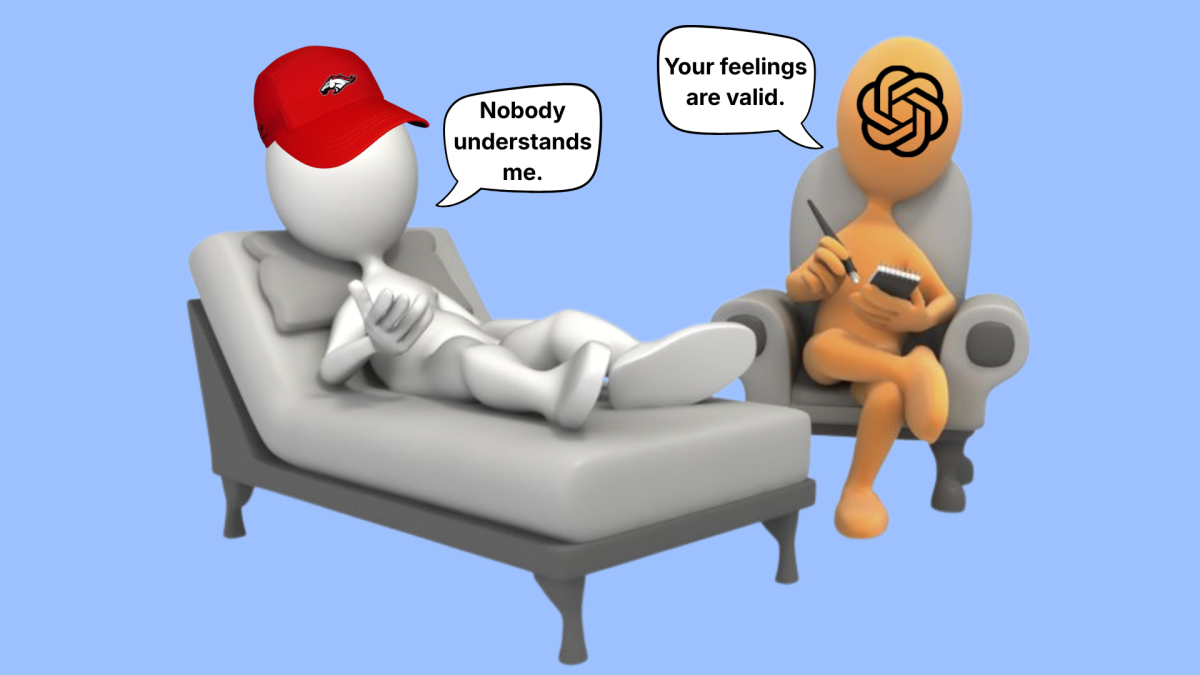
However, the senior found that the responses rarely offered meaningful advice. Instead, they often reassured him or reflected the way he had already framed the situation.
“I feel like it was just making me feel right, not giving any real advice,” he said.
Brophy psychologist Dr. Colleen Feeney Wilson said that this is part of what concerns her about students turning to AI for personal guidance. She emphasized that relationships with real people play an important role in learning how to communicate, respond to others, and navigate difficult situations.
“Those are really valuable skills that I’ve got to get people for the remainder of their life that you’re not going to get from typing,” Feeney Wilson said.
She also expressed concern that AI can reinforce confirmation bias by responding according to the information and framing provided by the user. Rather than challenging someone’s perspective, a chatbot may simply validate it.
For the senior, the experience ultimately changed his view of using AI for personal advice. He said he would probably not use it that way again because it felt “very biased” and “not very helpful.”
AI can be a useful tool for organizing thoughts or exploring questions, but there is a distinction between using it to reflect and allowing it to replace human connection.
As Feeney Wilson put it, “By trying to be more efficient, we’re completely losing our ability to engage in a meaningful way.”