












A one-hour conversation with a teacher might seem pretty insignificant, but for Brophy sophomores, it’s exactly the kind of meaningful, focused guidance that’s been missing. For those this year who completed the first-ever Sophomore Examen, it gave them clarity, purpose, and a path forward for the rest of their time at Brophy.
The Sophomore Examen is a new formation program designed specifically to check in on students academically, spiritually, and socially. This program has been pioneered by Dean of Student Support Services Mr. Austin Pidgeon ’08, modeled after a similar program first introduced at Creighton Preparatory School in Omaha, Neb. Principal Mr. Jim Bopp, who previously served at Creighton up until 2016, brought Pidgeon’s attention to it, sparking its implementation.
The Sophomore Examen fills a long-standing gap in support for 10th graders, offering them a chance to pause, reflect, and get the guidance they’ve historically lacked. Mr. Pidgeon furthers this saying, “[w]e’ve …consistently heard that sophomores feel kind of left out, no retreats, less access to counselors. So we built this to support sophomore formation.”
However, this program does not merely aim to improve grades or test scores, it aims to improve every aspect of the Brophy Grad-at-Grads by helping students set SMART goals for each of the five principles. This challenges students to think about who they’re becoming, not just what they’re doing.
“I don’t think I would’ve made my goals like that without the Sophomore Examen. I’d never really thought deeply about my school goals before, or the Grad at Grad goals,” said Hassan Dellano ’27.
Like Dellano, the examen also helped many others make their goals more attainable, and helped them to connect them with the Grad at Grad Principals: Loving, Open to Growth, Religious, Committed to Doing Justice, and Intellectually Competent.
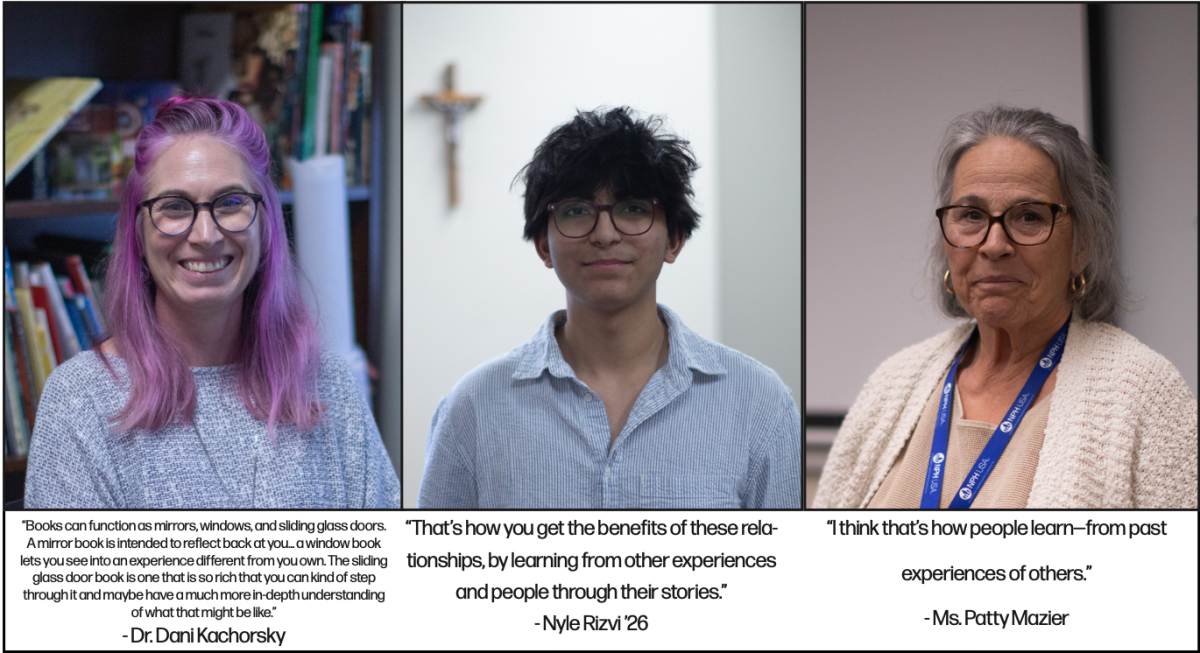
Despite the harsh nature of critiquing someone’s goals, many teachers took a great approach toward helping students by using a more encouraging tone. Mrs. Patty Mazier, one of the facilitators of the examen, said it was relatively easy to conduct these conversations and found both the students and parents helpful and eager to offer input. “It wasn’t hard to sit and talk with a student and their parent for 50 minutes to an hour,” Mazier said.
While this program was modeled to a one-size-fits-all structure, some kids needed more input from teachers than others. However, this model held steady with Mrs. Mazier, saying, “For the kids who haven’t done much, it showed them: ‘I’m halfway through—I can start doing something now.”
Mazier’s comment goes to show how this style of intervention with students is very effective at allowing teachers to start encouraging students to get their acts together in a way they otherwise would not have been able to do.
Overall, the Sophomore Examen fills a void in guidance experienced by sophomores, and ties into Brophy’s goal of forming the whole person, along with effectively implementing the Grad-at-Grad principles deeper into students’ lives.
As Dellano mentioned, the challenge also helped students make their personal goals feel more attainable and aligned with the Grad at Grad values that Brophy emphasizes—values that can sometimes feel abstract or out of reach for some students.
Despite this program being new and still a work in progress, it was a major success in improving the lives of Brophy Sophomores.